


Introduction: The Hidden Capacity Bottleneck in Steel Ladles
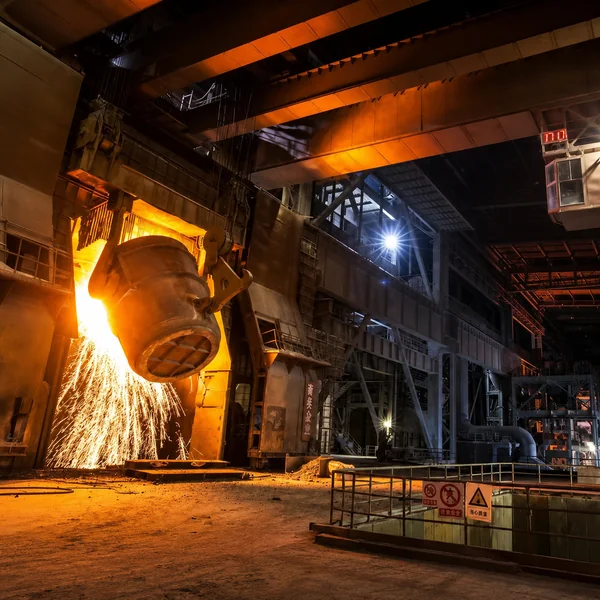
For many steel plants, increasing output does not always start with a new furnace, a larger crane, or a major workshop expansion. Sometimes, the capacity bottleneck is hidden inside the ladle lining itself.
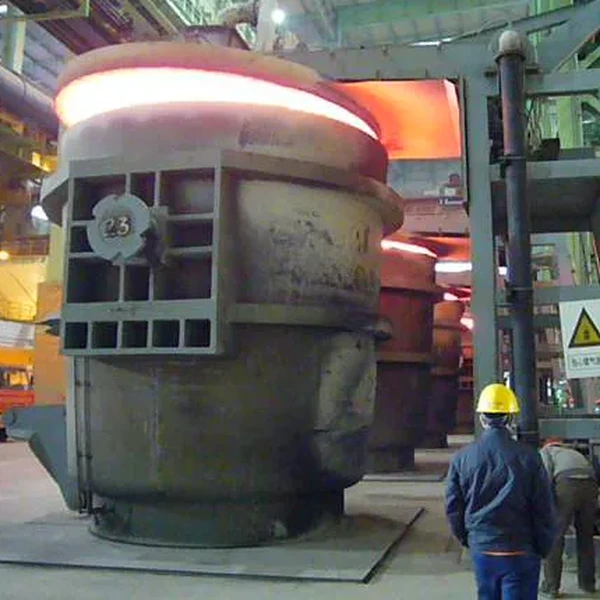
A steel ladle has a fixed outer shell diameter. Within that limited space, every millimeter used by the refractory lining is a millimeter that cannot be used for molten steel. Traditional steel ladle insulation systems often rely on relatively thick layers of insulating firebrick, lightweight castable, or other conventional refractory backup insulation materials. These layers help control shell temperature, but they also occupy valuable internal volume.
This is where microporous insulation board steel ladle applications become strategically important. By using a thinner, high-efficiency insulation layer in the ladle backup lining, steel plants can reduce ladle heat loss, support shell temperature control, and potentially release more effective internal volume without changing the steel shell, trunnions, crane system, or transfer equipment.
In other words, a better steel ladle refractory design can help turn insulation thickness into production capacity.
The Dilemma of Traditional Steel Ladle Backup Linings
The Space-Limiting Nature of Conventional Backup Insulation
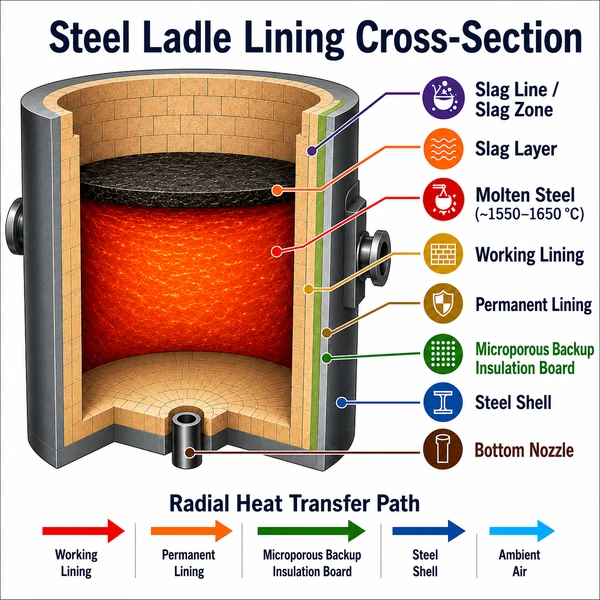
In a conventional steel ladle lining structure, the hot face working lining must resist molten steel, slag attack, abrasion, and thermal cycling. Behind it, the safety lining and permanent lining provide backup protection, while the backup insulation package helps reduce radial heat transfer toward the steel shell.
For many years, insulating firebrick, lightweight castable, or similar backup materials have been used in this position. They are familiar, easy to install, and relatively economical. However, compared with modern nano microporous insulation, their insulation efficiency is limited.
In many traditional designs, the backup insulation package may need to be relatively thick to achieve acceptable ladle shell temperature control. Depending on ladle size, lining structure, shell temperature target, holding time, and operating practice, this thickness may occupy a considerable part of the available lining space.
For a steel plant trying to improve output, this creates a difficult trade-off:
- Use a thicker backup lining, and the ladle may be thermally safer but lose internal capacity.
- Make the backup lining thinner, and the ladle may gain volume but risks higher shell temperature.
- Keep the same lining structure, and the plant may continue to face heat loss, shell hot spots, and avoidable thermal inefficiency.
This is why many plants cannot simply remove or reduce traditional insulation layers without a proper thermal engineering review.
What Happens When Backup Insulation Is Insufficient?
This is the part many commercial articles avoid, but it is exactly what steel plant engineers care about.
When ladle backup lining insulation is insufficient, the first problem is often not visible as a complete lining failure. It usually appears as operating symptoms.
The maintenance team may start to see shell hot spots on specific areas of the ladle shell. These hot spots may appear near the slag line, around worn lining zones, close to impact areas, or in positions where the refractory structure has become thinner after repeated campaigns.
If the problem continues, local shell temperature may rise faster than expected. This creates localized overheating, higher thermal gradients, and uneven stress through the refractory lining system. Over time, the steel shell may suffer from permanent distortion, fatigue cracking, or accelerated mechanical weakening.
In real steel plant operation, poor ladle insulation may also cause process-related problems:
- Higher tapping superheat requirement to compensate for heat loss.
- Faster steel temperature drop during transfer, holding, secondary refining, or before continuous casting.
- Shorter available holding time when the ladle waits for tundish turnaround or casting sequence adjustments.
- Greater risk of skull formation when temperature loss becomes difficult to control.
- Less stable ladle thermal management between heats.
- Higher thermal stress in the working lining due to uneven heat flow.
- More frequent maintenance pressure when shell hot spots become repeated inspection points.
These are not only refractory problems. They are production problems.
When a ladle loses heat too quickly, the steel plant may need to tap at a higher temperature. That means more energy consumption upstream and a narrower temperature control window downstream. If the temperature drop during transfer becomes excessive, continuous casting stability may be affected.
This is why ladle heat loss reduction is not just an energy-saving topic. It is connected with safety, productivity, casting stability, lining campaign, and total operating cost.
The Physics of Nano-Microporous Technology
Breaking the Limits of Thermal Conductivity
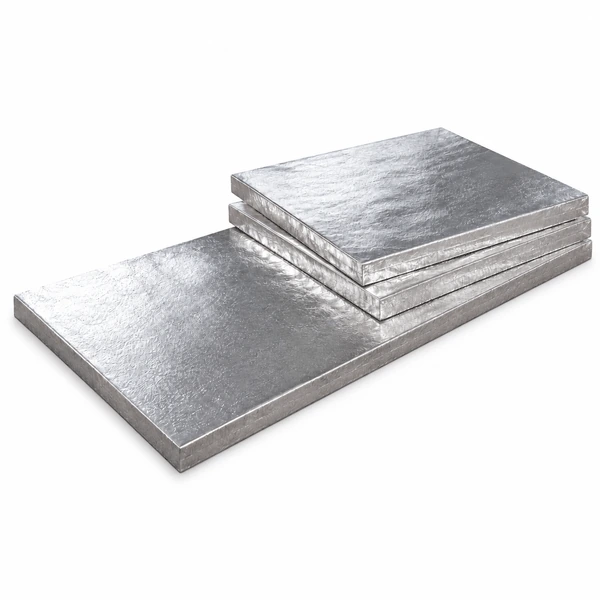
Microporous insulation boards are different from traditional porous insulation materials. Their insulation performance does not depend only on low density. Instead, it comes from a carefully engineered nano-scale pore structure and infrared radiation control.
A typical microporous board is made from nano silica, infrared opacifiers, and reinforcing fibers. Inside the material, the pore size is extremely small. When the pores are small enough, gas movement inside the structure is strongly restricted. This reduces gaseous conduction and almost eliminates internal convection.
At the same time, infrared opacifiers help reduce radiative heat transfer at high temperatures. This is important because radiation becomes increasingly significant as the service temperature rises.
In a steel ladle, heat moves mainly through a radial heat transfer path:
| molten steel -> working lining -> safety lining / permanent lining -> backup insulation -> steel shell -> surrounding air |
The role of the ladle insulation board is to increase the thermal resistance of this path in a very limited thickness. By reducing heat flux toward the cold face, the microporous layer helps control shell temperature while occupying less radial space.
Depending on grade, density, covering, and test conditions, Firebird microporous boards for steel applications typically show thermal conductivity around 0.036-0.044 W/m.K at 800°C. This is still significantly lower than many conventional backup insulation materials used in steel ladles.
To understand the engineering impact, consider this simplified comparison:
| Property | Conventional Backup Insulation Package | Firebird Microporous Board | Engineering Impact |
| Insulation principle | Porous structure, relatively thicker layer required | Nano-microporous structure + infrared opacifiers | Lower heat transfer in a thinner layer |
| Thermal conductivity at 800°C | Usually several times higher, depending on material grade | Around 0.036-0.044 W/m.K, depending on grade | Helps reduce heat loss and control shell temperature |
| Thermal design logic | Relies mainly on thickness | Relies on high thermal resistance | Allows possible reduction of backup lining thickness |
| Main value | Familiar and economical | Thin, high-efficiency thermal barrier | Creates space for lining optimization |
That performance difference is the technical foundation for using a thinner insulation layer in a steel ladle backup lining.
The Space-for-Yield Equation: Gaining Volume Safely
The most important value of microporous insulation board in steel ladles is not simply that it insulates better.
The real value is that it insulates better in less space.
In some lining upgrade projects, a customized microporous insulation layer may allow part of a conventional backup insulation package to be reduced. For illustration, if a traditional 100 mm backup insulation layer is redesigned as a 25 mm microporous insulation layer, the saved radial space may reach 75 mm.
However, this should be understood as a design case, not a universal replacement rule. The actual thickness must be verified through thermal calculation, shell temperature target, ladle geometry, working lining design, slag line condition, heat holding duration, and site operating conditions.
If the outer steel shell remains unchanged, the saved thickness can be transferred back into the internal working volume of the ladle. In this example, a 75 mm reduction in backup lining thickness means the internal radius may effectively increase by around 75 mm.
In a cylindrical or slightly tapered vessel such as a steel ladle, even a small increase in internal radius can create a meaningful increase in volume. This is governed by the basic volume formula:
| V = pi x r^2 x h |
Because volume scales with the square of the radius, a few centimeters of additional radius may become several tons of additional molten steel capacity.
This is the core reason why steel plants evaluate microporous insulation to increase ladle capacity.
The insulation board does not increase capacity by itself. It increases capacity by allowing the backup lining to be redesigned thinner while still supporting ladle heat loss reduction and shell temperature control.
Calculating the ROI: How Thinning the Backup Lining May Drive Profit
A Simplified 130-Ton Ladle Calculation
Let us take a simplified calculation model based on a 130-ton steel ladle.
Assume the original backup lining uses a 100 mm conventional insulation layer. After thermal review, the design is upgraded by replacing that layer with a customized 25 mm microporous insulation layer.
The outer steel shell remains the same, but the effective internal radius increases by 75 mm.
Under one assumed ladle geometry, this lining optimization may create an estimated capacity gain of around 4.5 tons per heat. Actual results depend on ladle diameter, working height, taper, freeboard requirement, lining configuration, and operating practice.
Now, let us look at the financial logic:
| Item | Assumption |
| Estimated additional capacity per heat | 4.5 tons |
| Ladle turnaround rate | 12 heats/day |
| Potential daily output increase | 54 tons/day |
| Annual operating days | 300 days |
| Potential annual throughput opportunity | 16,200 tons/year per ladle |
This does not mean every plant will automatically gain 16,200 tons of saleable output. The real financial value depends on steel grade, production bottleneck, steel margin, installation cost, lining cost, ladle campaign performance, and whether the plant can actually absorb the additional throughput.
But the calculation explains why the ROI discussion is important.
For a high-utilization steel plant, microporous insulation should not be evaluated only as a material cost. It should be evaluated as part of a broader strategy for:
- Asset utilization.
- Throughput optimization.
- Marginal tonnage gain.
- Ladle energy saving.
- Operational efficiency.
- Refractory system optimization.
In many cases, the payback period can be attractive, but it should always be calculated case by case based on actual operating data.
Operational Benefits Beyond Capacity Gain
1. Better Control of Ladle Shell Temperature
A well-designed microporous backup lining helps reduce ladle heat loss and supports lower shell temperature.
Instead of simply thinning conventional insulation materials, engineers can use microporous boards to maintain a more effective thermal barrier in limited space. This helps reduce shell overheating risk and supports safer ladle operation.
In many steel plants, keeping shell temperature below about 300°C is an important operating target. Lower and more stable shell temperature can help reduce shell deformation risk, thermal fatigue, and long-term maintenance pressure.
This is especially useful when the plant already sees repeated shell hot spots or localized overheating after several campaigns.
2. Lower Temperature Drop During Transfer and Holding
Reducing heat loss through the ladle wall helps retain molten steel temperature for a longer period. This supports more stable temperature control during transfer, secondary refining, holding, and continuous casting.
In practical terms, better insulation may help reduce the need for excessive superheat at tapping. It may also support more predictable temperature drop management before casting.
This matters when the ladle has to wait for tundish turnaround, casting sequence changes, or short production delays. A better insulated ladle gives the plant a wider operating window.
3. Lower Risk of Skull Formation
When molten steel temperature drops too quickly, skull formation risk may increase in certain operating conditions. This is especially relevant during holding, transfer delays, or unstable casting schedules.
Microporous backup insulation cannot solve all skull-related issues, but it can support better ladle thermal management by reducing radial heat loss through the lining.
4. Lighter Tare Weight and Easier Handling
Replacing a thick conventional backup insulation package with a thinner microporous board may reduce the dead weight of the ladle lining.
A lighter backup lining can help ease the load on cranes, transfer cars, and related handling systems. For older plants where lifting capacity is already close to the limit, this can become a practical advantage.
In some projects, crane load issues are not only about maximum lifting capacity. They also affect operational flexibility, safety margin, and equipment fatigue over long-term operation.
5. More Flexible Steel Ladle Refractory Design
Microporous boards also give engineers more design flexibility. The saved thickness can be used in different ways:
- Increase molten steel volume.
- Provide more space for a stronger working lining.
- Improve insulation in shell hot spot zones.
- Reduce heat flux through critical areas.
- Support customized lining designs for different ladle sizes and operating conditions.
This flexibility is one reason why microporous insulation is increasingly considered in modern steel ladle refractory design.
Design Considerations Before Using Microporous Boards
Although the benefits are clear, microporous insulation boards must be used correctly.
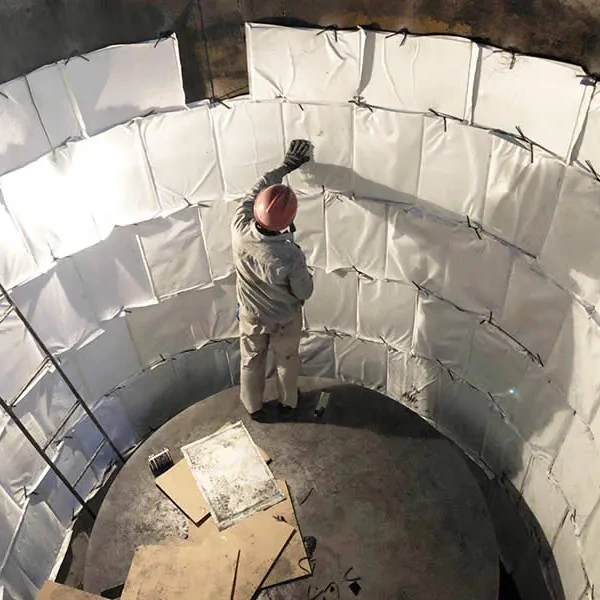
They are high-efficiency insulation materials, but they are not working lining refractories. They should not be directly exposed to molten steel, slag, mechanical abrasion, or severe impact. They are normally installed behind the working lining, safety lining, or permanent lining as part of the backup insulation system.
Several design factors should be reviewed before selection:
- Ladle capacity and shell geometry.
- Current refractory structure drawing.
- Working lining, safety lining, and permanent lining thickness.
- Existing backup insulation thickness.
- Average tapping temperature.
- Maximum shell temperature target.
- Current ladle shell temperature profile.
- Location of shell hot spots or localized overheating.
- Heat holding duration.
- Number of heats per day.
- Ladle campaign life requirement.
- Risk of slag penetration or steel leakage.
- Installation method and board protection.
- Required thickness, covering material, and cutting tolerance.
Moisture protection is also important. Standard microporous boards should be kept dry during storage, cutting, installation, and service. If the environment involves moisture, steam, or long storage before installation, a hydrophobic grade or suitable facing system should be considered.
This is why a proper thermal calculation and lining drawing review should always be completed before changing the backup lining.
Typical Questions Firebird Reviews Before Recommending a Backup Insulation Upgrade
For steel plants, EPC contractors, and refractory maintenance teams, the best starting point is not simply asking, “What thickness do you recommend?”
A better starting point is to understand the actual thermal problem in the ladle.
Before recommending a microporous insulation board steel ladle solution, Firebird usually reviews questions such as:
- What is the current ladle capacity?
- What is the current ladle shell temperature during operation?
- Are there any shell hot spots or localized overheating areas?
- What is the existing backup lining thickness?
- What materials are currently used in the working lining, safety lining, permanent lining, and backup insulation?
- What is the target shell temperature?
- What is the average tapping temperature?
- How long is the typical heat holding duration?
- How many ladle cycles are completed per day?
- What is the current steel temperature drop per heat?
- Is excessive tapping superheat currently required?
- Are there any crane load or tare weight limitations?
- Is skull formation a recurring issue?
- Is there a refractory lining drawing available for review?
- Is the main goal capacity gain, heat loss reduction, shell temperature control, or campaign improvement?
These questions help determine whether microporous insulation should be used for capacity increase, heat-loss reduction, shell temperature control, or a combination of all three.
They also help avoid a common mistake: selecting insulation thickness based only on material data, without considering the real operating condition of the ladle.
Conclusion: From Insulation Material to Ladle Thermal Optimization
In today’s steel industry, every millimeter inside a ladle has economic value.
A thick traditional backup lining may protect the shell, but it also occupies space that could otherwise carry molten steel. A thinner but more efficient insulation system can help solve this conflict.
By using microporous insulation board steel ladle solutions, steel plants can reduce backup lining thickness, lower heat loss, support shell temperature control, reduce tare weight, and potentially increase ladle capacity without changing the outer shell.
This is not just a material substitution.
It is a ladle thermal management upgrade.
For steel plants facing capacity pressure, energy cost pressure, and safety requirements at the same time, microporous insulation boards offer a practical way to convert thermal efficiency into measurable production value.
Zhengzhou Firebird New Material provides high-performance microporous insulation boards for steel ladle backup lining applications, including customized thicknesses, facing options, cutting support, and technical communication for lining optimization.
To evaluate your own ladle, please provide the working temperature, current refractory structure, backup layer thickness, shell temperature target, ladle capacity, daily turnaround rate, and any available shell temperature data. Firebird can help estimate how much capacity improvement and heat-loss reduction may be achieved through a microporous backup insulation upgrade.